Knowing how to prevent a hangover in Las Vegas comes down to what you do before the first drink, not after the last one. These 9 steps cover the variables you actually control: how hydrated you start, what is in your stomach, what you drink, how fast, and what you have lined up for the morning after.
Las Vegas adds a few variables that generic advice leaves out, and this guide covers those too.
Why Hangover Prevention Is Different in Las Vegas
Most hangover advice is written for a city with ordinary humidity, a short walk home, and a normal Saturday. Las Vegas is none of those things, and the difference is not a matter of atmosphere. It is measurable.
You arrive at your first drink already further behind on fluids than you would be almost anywhere else, and the night that follows tends to be longer, hotter, and spent on your feet.
The Local Context
Relative humidity in Las Vegas averages about 30 percent across the year and drops to roughly 17 percent in June, according to the National Weather Service. In that kind of dry air you lose water continuously through breathing and through skin, without ever noticing you are sweating.
Pool party season runs from April through September, which adds direct sun and heat to a day that often starts drinking earlier than a night out would elsewhere. A Strip evening also involves far more walking than people plan for, frequently in shoes chosen for the photographs rather than the distance.
The city's calendar concentrates all of this into specific weekends. New Year's Eve, Super Bowl weekend, the first round of March Madness, Memorial Day and EDC, the Fourth of July, Labor Day, Halloween, fight weeks, and Formula 1 race week are the heaviest recovery windows of the year in this market.
Who This Applies To
This guide is written for anyone with a planned night ahead of them. That includes visitors on a two or three night trip, bachelor and bachelorette groups working through a packed itinerary, convention attendees with a client dinner followed by a late one, and residents across Henderson, Summerlin South, North Las Vegas, and Paradise who are going out locally.
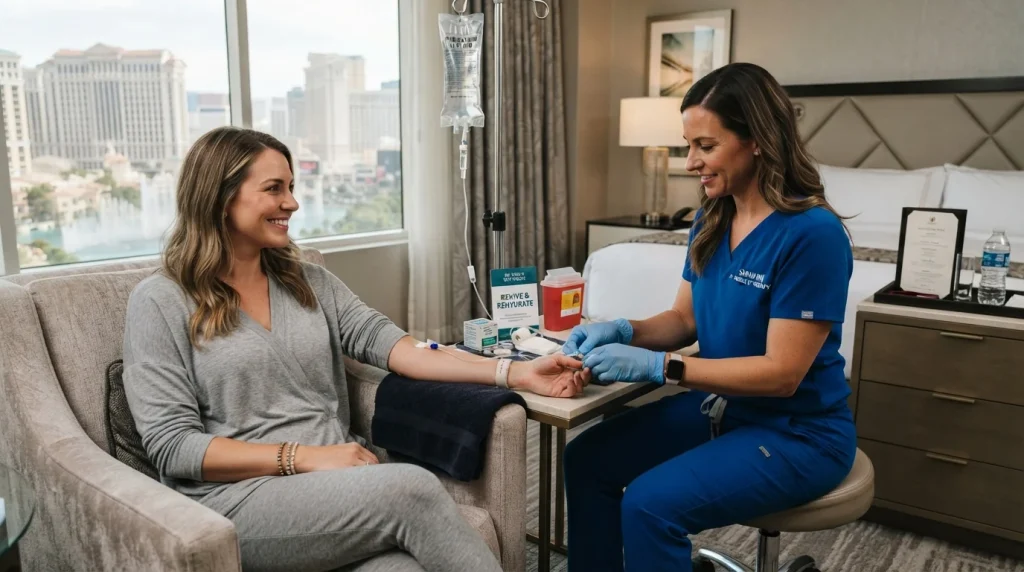
If you are staying on the Strip, in-room IV service at your hotel is available in the same way it is at a private address.
The 9 Prevention Steps
Each step below covers why it matters, what to actually do, and when the answer is a provider rather than a tip.
1. Start Hydrating With Electrolytes the Morning Before
Why it matters. Alcohol suppresses vasopressin, the hormone that tells your kidneys to hold on to fluid, so you lose more water than you take in for the rest of the night. Starting the evening already down on fluids means you begin that process from a deficit, and in 30 percent humidity you are usually starting down.
What to do about it. Drink through the day rather than in one push before you leave. Include sodium and potassium, not water alone, because plain water in volume dilutes what is left. An electrolyte packet with lunch and another in the late afternoon is a reasonable pattern. If you want the mechanism, we cover how electrolytes work separately, along with IV hydration in Las Vegas.
When to contact a provider. If you cannot keep fluids down, or you are lightheaded on standing before you have had anything to drink, that is a medical question, not a hydration tip.
2. Eat a Real Meal With Fat and Protein Before the First Drink
Why it matters. Food in the stomach slows how quickly alcohol reaches the bloodstream, which flattens the peak rather than removing it. It also gives you something to work with when blood sugar drops later in the night, which is part of why people wake at 4 a.m. feeling shaky.
What to do about it. Eat within about two hours of your first drink, and make it a full meal rather than something to line the stomach. Fat and protein slow gastric emptying more than a plate of bread does. A late dinner before a midnight start beats an early dinner at six.
When to contact a provider. If you are on medication that requires food, or you manage diabetes, ask your prescriber how a night of drinking fits before you plan around it.
3. Choose Lighter Colored Spirits
Why it matters. Congeners are compounds other than ethanol produced during fermentation and aging, and they are what give dark spirits their color and depth. Reviews of the research associate higher congener drinks, such as bourbon and other aged spirits, with worse hangover symptoms than lower congener options like vodka and gin.
What to do about it. If two drinks appeal equally, take the clearer one. Be aware that the effect is modest next to volume, so a clear spirit is not a licence to drink more of it. Sugary mixers add their own problem, so soda water over a cola is the better pairing.
When to contact a provider. If a specific drink reliably produces a reaction beyond a bad morning, such as flushing, hives, or wheezing, that is worth a conversation about intolerance rather than congeners.
4. Set a Pace and Alternate With Water
Why it matters. Pacing is the one variable with the most direct effect on how much alcohol is in your system at any moment. Roughly one drink per hour is the commonly cited threshold for keeping blood alcohol from climbing quickly, and a night out in Las Vegas is long enough that pace matters more than it does over a two hour dinner.
What to do about it. Alternate one glass of water for every alcoholic drink. In a club that means asking for water at the bar rather than waiting for a table service round. Set a rough count before you go out and treat it as a plan, not a target, and remember that a poured cocktail in Las Vegas is often larger than a standard drink.
When to contact a provider. If keeping to a pace you set is consistently difficult, that is worth raising with a primary care provider, and it is a routine conversation rather than an awkward one.
5. Account for the Desert, the Heat, and the Walking
Why it matters. This is the step that generic advice leaves out entirely. A day at a pool in July, followed by an evening covering the Strip on foot, is a serious fluid load before alcohol is added. Casino floors are air conditioned and dry, which masks how much you are losing because you never feel sweaty.
What to do about it. Treat a pool day as a hydration day with drinking attached, not the other way around. Carry water between venues rather than relying on finding it inside. Between April and September, get out of direct sun periodically, and take the walking distances seriously, since the gap between two Strip resorts is routinely longer than it looks. Our guide to preventing dehydration in Las Vegas goes further on the heat side.
When to contact a provider. Confusion, a body temperature that feels dangerously high, hot dry skin with no sweating, or fainting in the heat are signs of possible heat stroke. That is a 911 call, not an appointment.
6. Skip the Energy Drink Mixers
Why it matters. Caffeine does not reduce how impaired you are. It changes how impaired you feel, which is a different thing, and the practical consequence is drinking more over a longer stretch than you otherwise would. Caffeine is also a diuretic, working against everything in step one.
What to do about it. Keep caffeine and alcohol on separate parts of the evening. If you need something at 1 a.m., water is the better answer. Skipping the energy drink also protects the sleep in step eight, which caffeine that late will otherwise undo.
When to contact a provider. Heart palpitations, chest tightness, or a racing pulse after combining caffeine and alcohol should be assessed the same night, not slept off.
7. Check What You Take Before You Drink
Why it matters. This is the highest stakes item on the page, and the one most often gotten wrong on purpose. Taking a painkiller before bed to head off tomorrow is a common plan and a genuinely risky one. Acetaminophen combined with alcohol carries a risk of liver injury. Anti-inflammatories such as ibuprofen and naproxen carry a risk of stomach irritation and bleeding, and alcohol adds to that risk.
What to do about it. Do not pre-medicate to prevent a hangover. If you take a regular medication, check with the prescriber or a pharmacist how it interacts with alcohol, and ask before the night rather than during it. Over the counter does not mean risk free in this combination.
When to contact a provider. Any abdominal pain, black or bloody stool, vomiting blood, or yellowing of the skin or eyes after mixing alcohol and medication needs emergency care immediately.
8. Protect Your Sleep Window
Why it matters. Alcohol may shorten the time it takes to fall asleep, but it disrupts sleep architecture through the second half of the night. Much of what people describe as a hangover the next day is the fatigue and irritability of a badly fragmented night. In a hotel with a check out time and a booked morning, that window is already short.
What to do about it. Finish drinking earlier than the venue closes. Have water and something light before bed rather than a full meal. Keep the room properly dark and cool, and if you can, avoid setting an early alarm on the night you know will run long.
When to contact a provider. If you regularly need alcohol to fall asleep, or you wake gasping or with a pounding heart, both are worth a medical conversation independent of any night out.
9. Plan Recovery Before You Need It
Why it matters. The morning after is easier to handle when it is arranged in advance rather than improvised at 9 a.m. In this market, morning appointment slots on peak weekends fill by the Thursday before, and wait times on those weekends stretch to between 90 minutes and two hours.
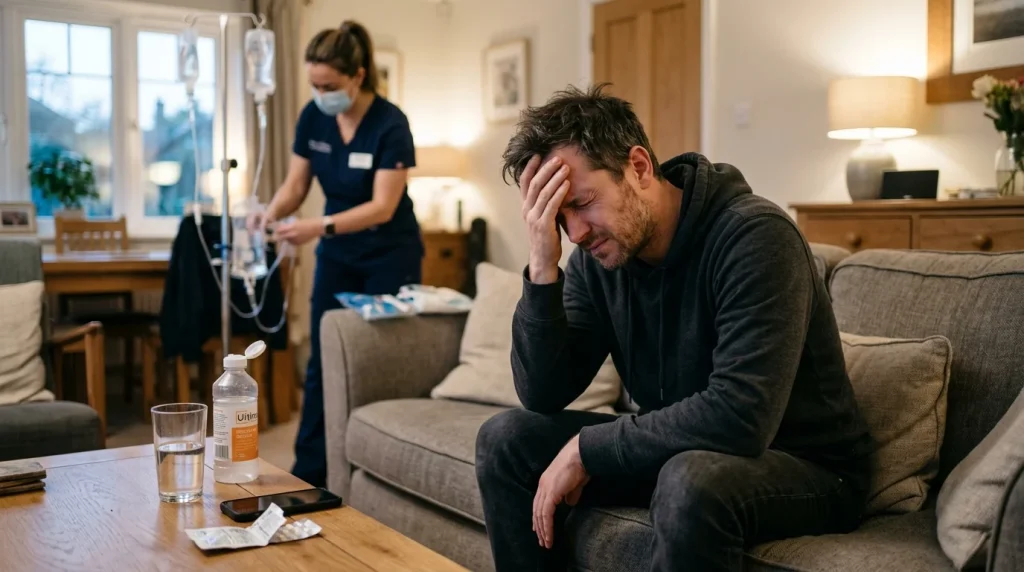
What to do about it. Decide before you go out what the morning looks like, and book it if you want it. Las Vegas Mobile IV Therapy operates 24 hours a day and comes to your home, hotel, or rental. The hangover IV therapy in Las Vegas option is 45 minutes and is priced at $250. IV hydration delivers fluids, electrolytes, and vitamins into the bloodstream and bypasses digestion entirely, which is the practical argument for it when keeping fluids down is the problem.
What it does not do. An IV before you drink does not reduce intoxication, does not lower blood alcohol, and does not make it safe to drink more. Nothing on this page changes how alcohol affects your judgement or your ability to drive. Individual results vary, and many clients report feeling better within 30 to 60 minutes.
When to contact a provider. IV hydration is supportive care, not emergency care. If someone is unconscious, cannot be woken, is breathing slowly or irregularly, or has cold or bluish skin, call 911.
What Prevention Cannot Do
Every page on this topic wants to promise more than the evidence supports, so here is the limit stated plainly. The National Institute on Alcohol Abuse and Alcoholism holds that there is no cure for a hangover other than time, and that the only certain way to avoid one is not to drink or to keep intake to a minimum.
The hydration story is also more complicated than it is usually told. A 2024 review in Neuroscience and Biobehavioral Reviews revisited the question directly and found that drinking water during or immediately after alcohol had only a modest effect on next day hangover severity. Dehydration and hangover turn out to be two separate after effects that happen to occur together, with the dehydration typically milder and shorter lived than the hangover itself.
That does not make hydration pointless. It makes it one variable among several, rather than the switch that turns a hangover off. Steps one through nine reduce severity. They do not deliver a morning that feels like you did not go out.
Las Vegas Mobile IV Therapy operates under Medical Director Dr. Daniel Olivero, MD, with treatments administered by licensed nurses and NREMTs. These statements have not been evaluated by the FDA, and this service is not intended to diagnose, treat, cure, or prevent any disease.
What to Do Next
At-Home Steps for Tonight
Work backwards from when you are leaving. Electrolytes with lunch and again in the late afternoon, a full meal within two hours of the first drink, water alongside every round, and a decision about when you stop. If you are out in the heat, add water between venues rather than at the end.
When to Book an IV
Book when keeping fluids down is the problem, when you have something in the morning you cannot move, or when you would rather have the appointment set than hope for one. A Hangover IV is $250 and takes 45 minutes. A Hydration IV is $199. Add-ons are $35 each. A $99 fee applies for service between 8:00 PM and 7:00 AM. See what mobile IV therapy costs in Las Vegas or our full IV menu for the rest of the options.
When to Escalate to Urgent Care or Call 911
Call 911 for confusion, seizures, vomiting that will not stop, slow or irregular breathing, cold, clammy, pale or bluish skin, or someone who cannot be woken. These are signs of alcohol poisoning. Suspected heat stroke and pregnancy are also emergency or provider questions rather than IV ones. IV hydration is supportive care and is not a substitute for emergency care.
Sources and References
- National Institute on Alcohol Abuse and Alcoholism, Hangovers. niaaa.nih.gov/publications/brochures-and-fact-sheets/hangovers
- Merlo A, et al. (2024). Alcohol hangover versus dehydration revisited: The effect of drinking water to prevent or alleviate the alcohol hangover. Neuroscience and Biobehavioral Reviews. pubmed.ncbi.nlm.nih.gov/39069212
- National Weather Service, Climate of Las Vegas. weather.gov/vef/ClimateofLasVegas
- Rohsenow DJ, Howland J. The Role of Beverage Congeners in Hangover and Other Residual Effects of Alcohol Intoxication: A Review. pubmed.ncbi.nlm.nih.gov/20712596
Las Vegas Mobile IV Therapy serves the Las Vegas metro and Southern Nevada, in homes, hotels, and rentals across these communities.